
Understanding Dry Matter vs. As-Fed Analysis
Why Raw Diets Often Appear Lower in Protein
Two classifications are commonly used to evaluate the nutritional content of pet food: Dry Matter Basis (DMB) and As-Fed Basis. These terms are frequently misunderstood and are one of the main reasons why, at first glance, raw pet food diets often appear to contain less protein than kibble.
Unfortunately, not all pet food packaging clearly states whether the Guaranteed Analysis is presented on an As-Fed or Dry Matter basis. This can understandably leave pet owners confused—or even concerned—when comparing the protein and fat content of different commercial diets.
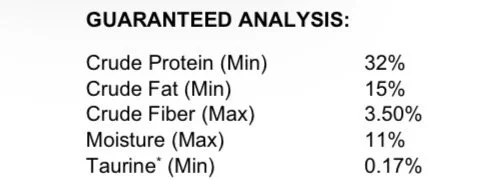
The nutrition panel found on commercial pet food packaging is called the Guaranteed Analysis. It lists the minimum or maximum amounts of key macro nutrients, such as protein, fat, fiber, and moisture. Generally, the Guaranteed Analysis is reported on an As-Fed basis, meaning it includes the moisture present in the food. However, because the commercial pet food market is made up predominantly of dry kibble—which contains very little moisture—the As-Fed and Dry Matter values are often quite similar. As a result, many nutrition professionals and educational resources use Dry Matter Basis (DMB) when comparing foods because it allows diets with vastly different moisture contents to be evaluated on equal footing.
Dry matter refers to everything that remains after the water has been removed from the food. Since kibble typically contains only about 8–12% moisture, converting it to a Dry Matter Basis results in only a small change in the nutrient percentages. Fresh, canned, and raw diets, on the other hand, contain substantially more moisture, making the Dry Matter calculation essential for accurate comparisons. Some fresh food manufacturers also provide a Dry Matter Analysis, but many do not. As a result, raw foods often appear much lower in protein and fat than they actually are.
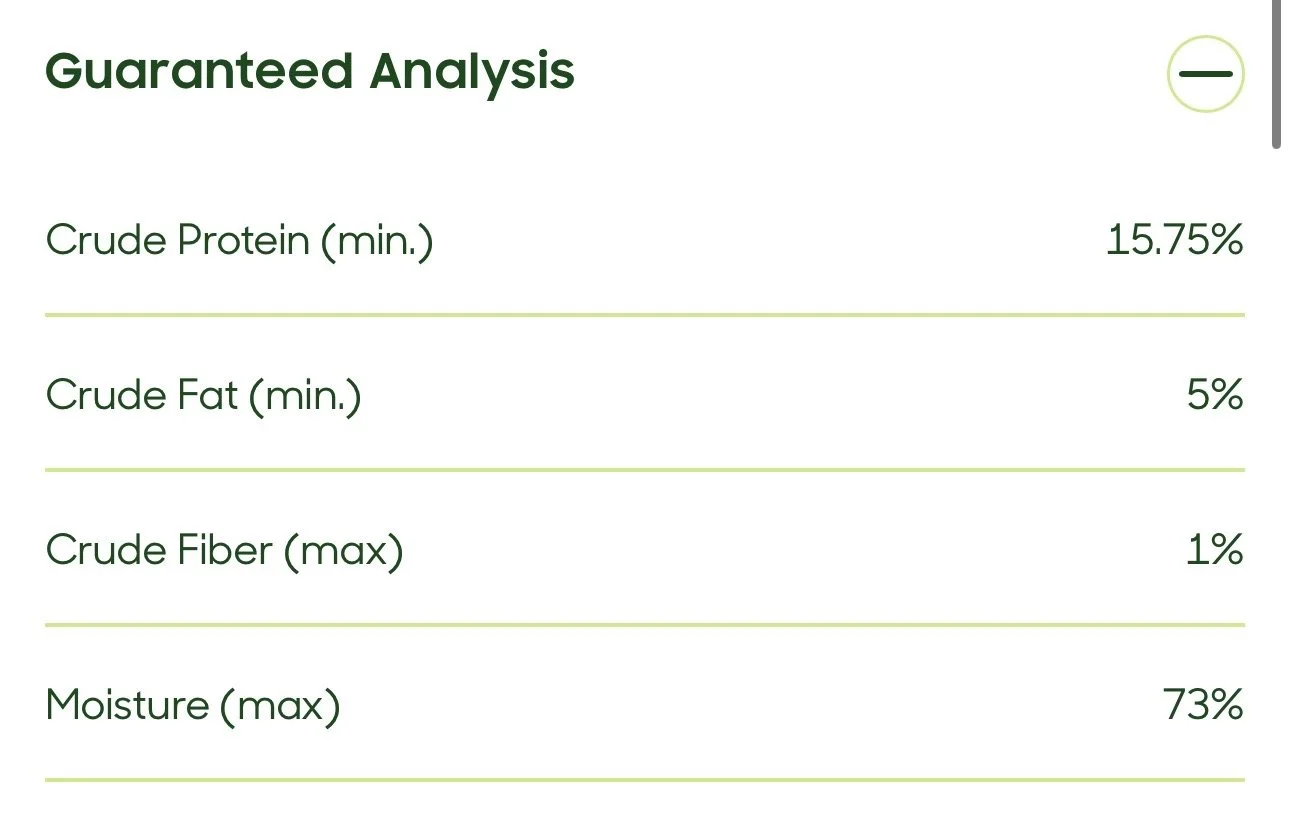
This image is from a popular commercial raw pet food brand, Smallbatch and is a prime example of this topic.
Raw diets typically contain more meat-based ingredients than kibble, while kibble generally requires binders and often contains a higher proportion of carbohydrates from ingredients such as grains, potatoes, or legumes.
However, because this Guaranteed Analysis is reported As Fed, the food appears much lower in protein and fat than a typical kibble. Looking more closely, you'll notice that the food contains approximately 73% moisture, which significantly dilutes the percentages shown on the label. So although it appears to be lower, raw food diets are generally higher in protein and fats than kibbles.
If we were to compare this food to the kibble on a dry matter basis, you would find that this food is higher in protein and fat. To do this, we would use this equation: Dry Matter %=100−Moisture %
In this case:
Moisture = 73%
Dry Matter = 27%
Then divide each nutrient by the dry matter percentage and multiply by 100.
The Dry Matter Analysis for this Raw Food would then be:
Crude Protein (min): 58.3% DMB
Crude Fat (min): 18.5% DMB
Crude Fiber (max): 3.7% DMB
This conversion allows to compare the two diets on equal footing.
One more example from one of one of the recipes available in our ABD Member’s Hub.
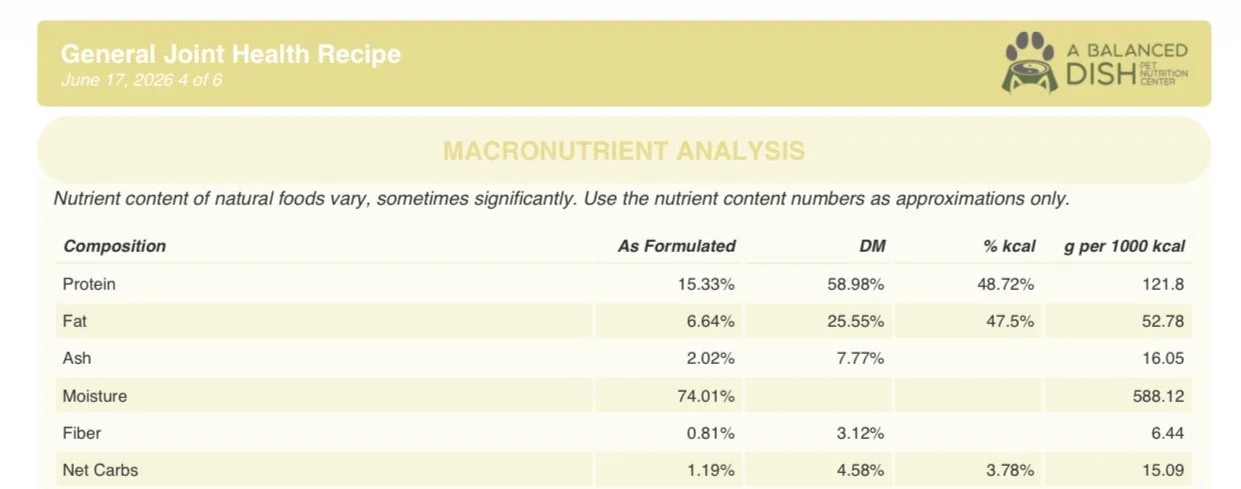
This Analysis provides the “As Formulated” = “As Fed” as well as the Dry Matter (DM) breakdown of a Gently Cooked recipe.
As you can see again, the “As Formulated” column makes the food appear lower in protein and fat than the kibble featured above. However, if we compare the Dry Matter column which compares the macronutrient makeup of the Gently Cooked recipe and the Kibble on equal footing you can see that the recipe is actually much higher in both protein and fat.
Notes from our Pet Nutritionist:
Living beings are designed to consume diets with a high moisture content. Dietary moisture plays an important role in supporting healthy organ function. Cats, in particular, are prone to chronic dehydration because they are biologically adapted to obtain the majority of their hydration from their food rather than from drinking water. Even if you regularly see your cat drinking—or they love their water fountain—they often do not consume enough water to fully compensate for a dry diet. Over time, this places unnecessary strain on the kidneys.
This does not mean that kibble is more nutritious than fresh food. Instead, it means that kibble is generally more calorie-dense by volume because it contains very little water. A pet eating the recommended amount of kibble and a pet eating the recommended amount of a high-moisture fresh diet are both receiving the nutrients intended by those foods. The difference is that fresh diets also provide naturally occurring moisture from meat, that contains beneficial compounds such as electrolytes and myoglobin.
A protein level of 58% on a Dry Matter Basis is not "too high" for an otherwise healthy dog. Dogs thrive on diets rich in highly bioavailable protein and fat. In fact, senior dogs often benefit from increased amounts of high-quality protein to help combat age-related muscle loss (sarcopenia).
Dogs have no nutritional need for carbohydrates. They can utilize carbs for energy if needed, but their bodys preferred source of energy is fat. Cats are obligate carnivores, meaning their body cannot properly breakdown and utilize plant material. That said, certain medical conditions may require carbohydrates as part of a therapeutic nutrition plan. In some cases, specific carbohydrate sources can also be incorporated temporarily for therapeutic purposes, including applications within Eastern Food Therapy. However, carbohydrates are not considered an essential macronutrient for healthy dogs or cats.
If your pet has protein in their urine, this should be investigated further because it can point to serious underlying health conditions. It does not always mean your pet cannot tolerate the protein level of their food. It can also indicate chronic inflammation which in some cases can be due to allergies or food intolerances.
***Disclaimer: This article is intended for educational purposes only and should not be considered veterinary medical advice or a substitute for professional veterinary care. Every pet is unique, and nutritional needs can vary based on age, breed, health status, and medical conditions. If your pet is experiencing health concerns consult your veterinarian.
